What the New EU AML Framework Means for the Real Estate Sector
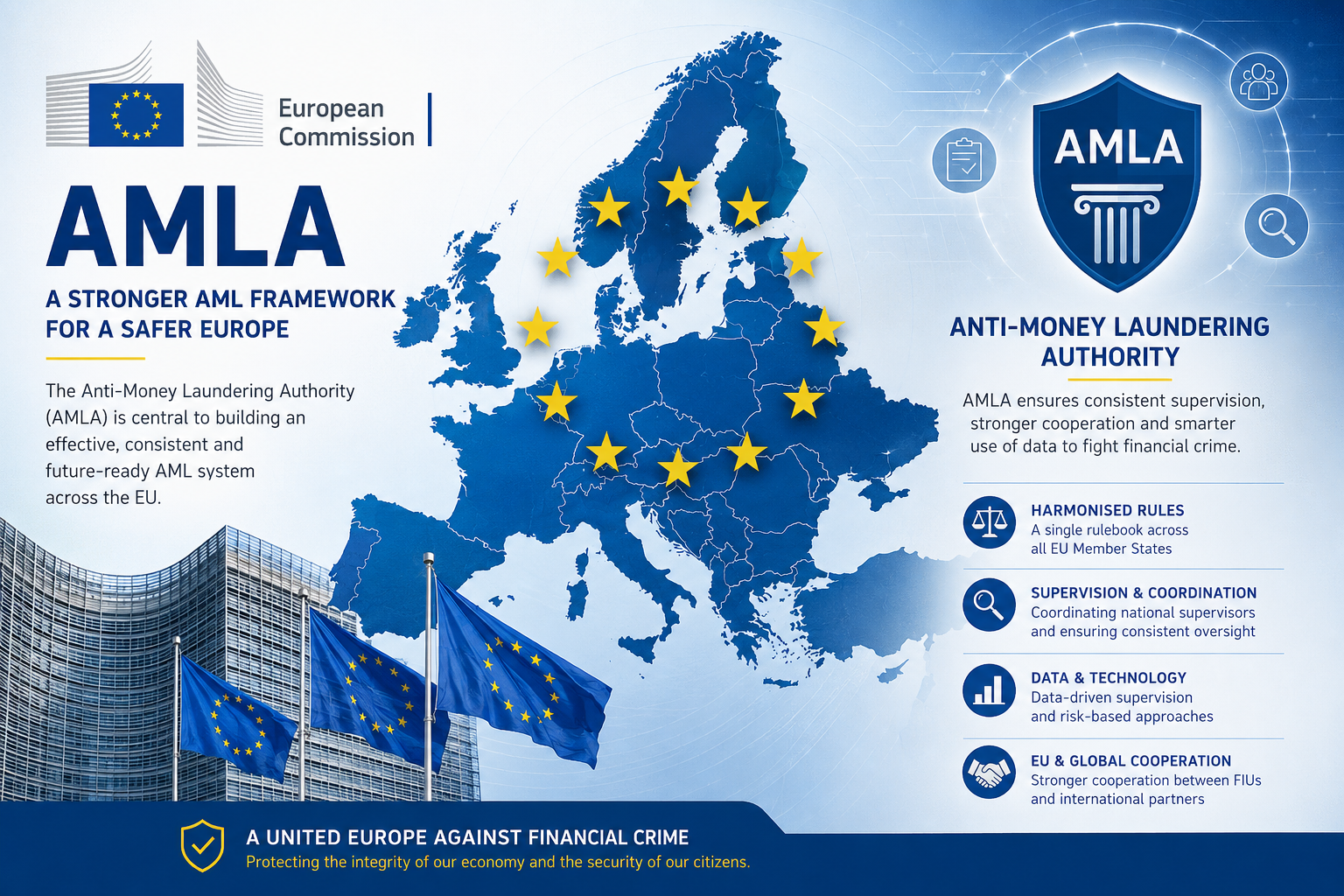
AMLA 2026–2028: What the New EU AML Framework Means for the Real Estate Sector
The European Union is entering a new era of anti-money laundering (AML) supervision with the rollout of the Anti-Money Laundering Authority (AMLA) and its 2026–2028 roadmap. While much of the attention has focused on banks and financial institutions, the impact on the non-financial sector — particularly real estate professionals and property-related businesses — will be equally significant.
As “obliged entities” under EU AML legislation, real estate agencies, brokers, developers, and other property market participants will face a more centralised, standardised, and data-driven compliance environment across Europe.
A Single AML Rulebook Across the EU
One of AMLA’s core objectives is the introduction of a Single Rulebook that will harmonize AML requirements across all EU Member States.
For the real estate sector, this means fewer differences in how AML obligations are interpreted nationally. Today, compliance expectations can vary significantly between jurisdictions, creating complexity for agencies and investors operating internationally.
Under AMLA, customer due diligence, beneficial ownership checks, reporting obligations, and risk assessment methodologies will become more aligned across Europe.
This is particularly important for cross-border property transactions, foreign investment structures, and international real estate portfolios.
Stronger Supervision of Obliged Entities
AMLA will also introduce more coordinated supervision among national regulators. Supervisory authorities will increasingly follow common standards and methodologies defined at EU level.
For real estate businesses, this means:
Greater consistency in AML inspections and audits
Increased expectations around internal controls and documentation
More standardized enforcement across jurisdictions
Real estate professionals should expect closer scrutiny of transaction monitoring, source-of-funds verification, and beneficial ownership transparency.
Data-Driven AML Compliance in Real Estate
A major shift under AMLA is the move toward data-driven oversight.
Compliance will no longer rely solely on manual checks and fragmented recordkeeping. Regulators will increasingly expect:
Structured and accessible compliance data
Clear audit trails
Risk-based customer profiling
Digital reporting capabilities
For the real estate industry, where high-value transactions and complex ownership structures are common, maintaining accurate and audit-ready records will become essential.
Technology-enabled AML processes and centralised compliance systems will play a growing role in meeting future regulatory expectations.
Improved Cross-Border Intelligence Sharing
AMLA also aims to strengthen cooperation between Financial Intelligence Units (FIUs) across Europe.
This enhanced coordination will improve the speed and efficiency of information sharing related to suspicious transactions, high-risk clients, and cross-border financial crime activity.
Given the international nature of many property investments, real estate professionals should expect increased visibility into cross-border transaction risks and stronger expectations around suspicious activity reporting.
What This Means for the Real Estate Sector
The establishment of AMLA represents a clear shift toward a more centralized and harmonized AML framework for all obliged entities — including non-financial sectors such as real estate.
Real estate businesses should begin preparing for:
More consistent AML enforcement across Europe
Higher expectations around documentation and transparency
Greater emphasis on data quality and reporting
Increased regulatory scrutiny of high-risk transactions
Stronger accountability for compliance governance
Organizations that modernize their AML processes early will be better positioned to adapt to the evolving European regulatory landscape.
Looking Ahead
As AMLA’s 2026–2028 roadmap progresses, the real estate sector will become increasingly integrated into a unified European AML ecosystem focused on transparency, data quality, and cross-border cooperation.
For real estate professionals, compliance will no longer be viewed as a purely administrative obligation, but as a critical component of operational resilience, risk management, and trust in the European property market.
At Immosurance, we continue to follow the regulatory developments shaping the future of compliance, risk management, and innovation within the real estate sector across Europe.